Business Waste Removal in Wimbledon for offices, shops and workplaces
Business waste removal in Wimbledon needs to be practical, careful and suited to the way commercial premises actually operate. Our service is arranged around the removal of non-hazardous commercial waste, from office furniture and general rubbish to bulky items that need loading, sorting and responsible disposal. The aim is straightforward: keep your premises clear, reduce disruption and make it easier to manage unwanted material without turning the job into a logistical problem.
We handle a wide range of business waste types through planned collections and one-off clearances, so you can deal with accumulated items after an office move, a refit, a stock change or a routine clear-out. Business Waste Removal Wimbledon is best approached as a service that balances speed with proper sorting, because the value lies not only in lifting items away but in making sure the process is organised, traceable and appropriate to the material involved.
Our work is suitable for premises that need more than a simple bin emptying arrangement. We can remove office chairs, desks, filing units, shelving, packaging, mixed bagged rubbish and other non-hazardous contents that are no longer needed. If you are comparing options, a good starting point is to think about what has to leave the building, what can be separated in advance and whether you need a single clearance or a repeated collection pattern.
Commercial waste clearances arranged around your premises
Business waste is rarely all the same, even within one building. A reception area may produce cardboard and packaging, a back office may hold outdated files and broken fixtures, and a store room may contain mixed items that have been left for months. We treat each clearance as a practical loading and sorting task, so the collection can be matched to the contents rather than forcing the contents to fit a rigid system.
For many customers, the main advantage is reducing pressure on staff. Rather than asking your team to carry items out in stages or work around piles of unwanted material, we can remove the waste in one planned visit. That makes it easier to keep corridors, stairwells, plant rooms and workspaces usable. It also helps when a business wants the task completed without turning an ordinary day into a stop-start clearing exercise.
There are many circumstances in which a commercial clearance is useful: end-of-lease tidy-ups, equipment replacements, office reorganisations, storage room decluttering and post-project waste removal. In each case, the right approach depends on the type of waste, access to the building and how much separating has already been done. Clear preparation is helpful, but it is not essential for every job; the key is identifying what should be removed and what must remain.
What we can remove from business premises
Our service can cover a broad mix of everyday commercial items, provided they are suitable for non-hazardous removal. That may include desks, task chairs, storage cabinets, meeting tables, broken reception furniture, office partitions, unwanted shelving, loose rubbish, bagged waste and other bulky contents that no longer serve a purpose. Where items are too large for standard refuse handling, the clearance approach becomes especially useful.
In practical terms, many customers use this service when work areas need to be stripped back to a cleaner base. A room may be full of redundant furniture, or a storage area may have become a collection point for surplus material. By removing the waste and separating recyclable items where possible, we help create a more manageable space without requiring the customer to organise multiple disposal methods for one job.
Some waste needs additional care, and some items may be unsuitable for routine collection. If a material is restricted, heavy, contaminated or not acceptable within a standard commercial load, it should be identified in advance so the collection can be planned correctly. If you are unsure about a particular item, it is better to describe it clearly than to assume it can be taken with ordinary office rubbish.
Office waste removal and workspace clear-outs
Office waste removal is often more about reducing clutter than removing a single obvious pile. Filing, packaging, broken chairs, redundant screens, worn-out desks and mixed rubbish can build up gradually until they begin to affect how the room is used. A structured clearance allows those items to be removed together, which is usually more efficient than handling them as separate small tasks over several days.
For businesses in shared buildings, access and timing can matter as much as volume. Narrow lifts, loading bays, stair access and building rules can influence how a clearance is carried out. That is why it helps to think about the route items will take out of the property before the job starts. If the waste is in several rooms, a sensible plan can reduce handling and make the removal less disruptive to daily operations.
One useful way to prepare is to decide which items are to stay, which are to go, and whether any documents, devices or reusable fixtures need to be set aside separately. The following points are often worth checking before a collection:
- Which rooms contain the waste and how easy they are to reach
- Whether furniture needs to be dismantled before removal
- If there are mixed materials that should be separated
- Whether any items are unusually heavy or awkward to carry
Furniture disposal for commercial interiors
Commercial furniture disposal is a common part of business waste removal because offices, shops and service premises often replace furniture long before the rest of the fit-out changes. Desks, cupboards, chairs, tables and storage units can quickly become surplus when layouts are updated. Removing these items in a planned way helps prevent them from lingering in unused rooms or taking up valuable storage space.
Different types of furniture need different handling. Flat-pack units may be simple to move once emptied, while older cabinets or larger desks can require disassembly or more than one person to carry them safely. Upholstered items, wood-based furniture and mixed-material pieces may also need sorting so they can be dealt with appropriately after collection. The main point is to match the removal method to the item rather than relying on a single routine for every object.
If your business is updating a floor or changing a room layout, furniture disposal is often most useful when it is linked to the wider clear-out. That can prevent repeated lifting, duplicated costs and unnecessary obstructions. It also makes it easier to keep the remaining furniture in good order, because items are removed before they are damaged by being moved around too many times.
Waste removal for refurbishments and changeovers

Refurbishment work usually produces a combination of waste streams, including old furnishings, packaging, broken fittings and mixed debris from the changeover. Business waste removal in this context is about clearing the non-hazardous material left behind when a site is being refreshed, reconfigured or returned to operational use. That can make the space easier for contractors, cleaners or staff to work in once the main activity has finished.
A sensible clearance plan takes account of how the premises will be used next. For example, a workspace being refitted may need larger pieces removed first so the room can be opened up, while smaller materials may be gathered later. In a retail setting, back-of-house areas might need priority if they are limiting storage or blocking access. The work is more effective when the sequence of removal reflects the layout of the site.
Refurbishment waste can also be time-sensitive. Items left in walkways, entrances or delivery areas can create avoidable obstruction, especially if other trades are still on site. Our approach is therefore based on practical access, sensible lifting and steady progress, with the objective of leaving the area clear enough for the next stage of work to continue.
Business waste pricing and what affects a quotation
Pricing for business waste removal is usually shaped by the amount of waste, the type of items, access to the premises and how much labour is involved in moving everything out. A straightforward load of bagged rubbish will be handled differently from bulky furniture that has to be carried from upper floors or dismantled before loading. The more accurately the contents are described, the easier it is to provide a quotation that matches the real job.
It also helps to think about any constraints that may affect the visit. Shared entrances, parking arrangements, lift use, opening hours and building rules can all influence the practical planning. If certain items are heavy, fragile or awkwardly placed, that should be included in the request. Good information does not need to be lengthy; it just needs to be clear enough for the job to be understood properly.
If you are preparing a quote request, keep it focused on the basics: what needs removing, where it is located, whether there are stairs or other access issues and whether the waste is all in one place or spread across the building. This is often enough to begin the conversation. When the details are ready, please request a quotation.
Sorting, recycling and responsible disposal
Responsible commercial waste removal is not only about lifting material away. It also involves checking what can be separated and what should be sent onward for the next appropriate step. Mixed business waste often contains recyclable items alongside general rubbish, so sorting matters if the aim is to manage the load carefully and avoid treating every item as though it were identical.
In practice, this can mean breaking down some items before loading, separating cardboard from general waste, and keeping reusable or recoverable material apart where it is practical to do so. The exact handling depends on the contents, but the principle is constant: make the removal efficient while avoiding unnecessary waste of potentially recoverable material. That is especially useful when a business has a lot of packaging, office contents or obsolete stock mixed together.
Customers often appreciate a service that pays attention to the final stage as well as the clearance itself. Once items are removed, the process should still be orderly and transparent. If you want waste taken from an office, store room or commercial unit in a way that is neat and sensible from start to finish, we can help with that approach. Ask about the best collection option for your premises.
About Wimbledon
Wimbledon is a district in southwest London best known for its mixture of open green space, suburban streets and long-established cultural associations. It sits within the London Borough of Merton, with the historic village area, the town centre and the residential southern slopes forming parts of a place that has grown and changed over time while retaining a recognisable local character. The district’s name is widely associated with the All England Lawn Tennis and Croquet Club, where the Wimbledon Championships have been held since the late nineteenth century, but the area’s identity reaches beyond that annual event. Wimbledon Common is one of the most notable landscape features nearby, a large expanse of heath and woodland that offers open ground, ponds and walking routes. The common has long been valued as a public open space and remains an important part of the local setting. Wimbledon also includes notable historic buildings and street patterns, especially around Wimbledon Village and the older centre, where commercial frontages and residential streets sit close together. The area is served by Wimbledon railway station and Wimbledon Park station, connecting it to central London and surrounding districts. Local life includes independent shops, cafés, sports facilities and community activity around the town centre, while the wider district contains schools, parks and a range of housing styles from period terraces to later apartment developments. Together these features make Wimbledon a place with a distinct urban and suburban mix, shaped by transport links, open land and a strong sense of local identity.
Business waste removal for retail, hospitality and shared premises
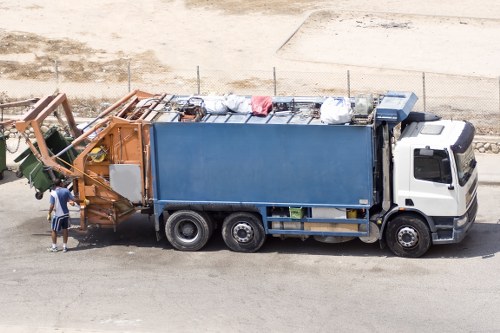
Retail units, cafés, shared offices and other customer-facing premises often need waste removal that fits around trading hours and everyday access. The waste may include packaging, display fixtures, worn seating, broken fittings, back-room clutter or surplus items from a stock rotation. A commercial clearance works best when it respects the flow of the business, because the removal has to happen without creating unnecessary obstruction for staff or visitors.
In shared premises, the job can also involve coordination with landlords, building managers or other occupiers. That may affect access routes, lift bookings, parking and the timing of the visit. A careful clearance avoids the kind of disruption that comes from trying to move bulky items through active areas at the wrong moment. The goal is always to remove the waste efficiently while keeping the premises usable and orderly.
Businesses often find it useful to have waste removed when a unit is changing hands, when a display is being updated or when back-of-house storage has become overloaded. In those situations, the work is not just about tidying up; it is part of keeping the space ready for daily use. If you want a straightforward commercial clearance rather than a piecemeal approach, we can help you plan the removal sensibly.
How to prepare for a collection
Preparation for business waste removal is usually simple, but a little planning can make the collection smoother. It helps to identify the items to be removed, group them where possible and make sure access routes are clear enough for safe loading. If several rooms are involved, a quick room-by-room check can prevent accidental removal of anything that should stay in place.
Photographs or a short written list can be useful when you are requesting a quotation, especially if there are bulky items or mixed contents. It is also sensible to mention stairs, narrow doorways, restricted parking or building rules, because these details can affect how the work is arranged. The aim is not to create a lengthy briefing, only to provide enough information for the clearance to be understood accurately.
Once the collection is arranged, try to keep the load area accessible and make any agreed items easy to identify. That saves time on the day and helps the process remain straightforward. If the waste includes different categories, separating them in advance can also support a cleaner, more efficient removal.
Why commercial clients choose a managed clearance
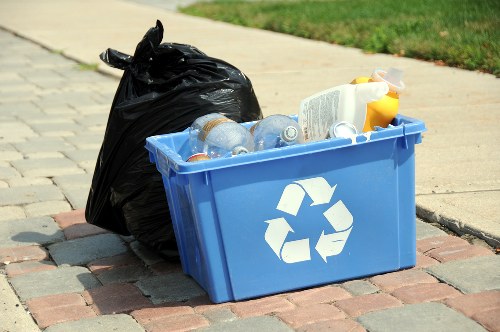
Many businesses prefer a managed clearance because it keeps the task contained. Rather than dealing with irregular waste themselves, they can have one structured removal that addresses the materials in a single visit or planned sequence. That is useful for businesses that need to free up space quickly, but it is equally helpful for those that simply want a reliable way to deal with surplus items without placing extra pressure on staff.
A well-handled clearance also supports better use of the premises afterwards. Once redundant furniture, rubbish and mixed items are removed, rooms are easier to clean, stock and reorganise. Storage areas can be used properly again, and workspaces become less awkward to navigate. For many customers, that practical improvement is the real reason to arrange business waste removal rather than leaving the job for later.
If your premises in Wimbledon need commercial waste taken away, we can help with a clear and sensible service that focuses on the removal itself. Use the detail that best describes your site, let us know what needs clearing and request a quotation when you are ready. We will then help you move the job forward in a way that suits the space and the waste involved.