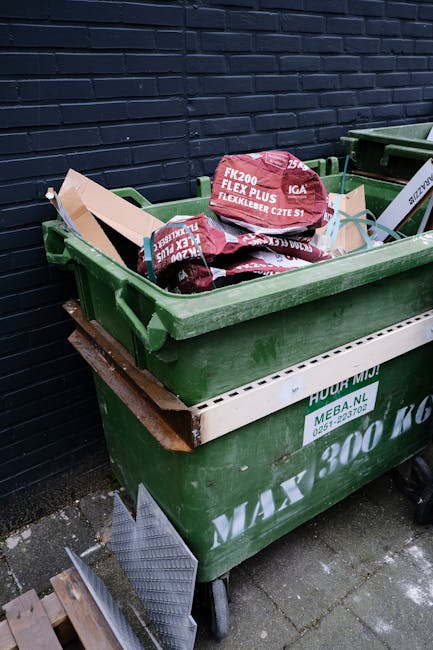
Wimbledon Village rubbish services near Centre Court: a practical guide for homes, flats and local businesses
If you are looking for Wimbledon Village rubbish services near Centre Court, you are probably dealing with one of three things: a pile that has grown too quickly, a move or refurb that is suddenly more stressful than expected, or a space that simply needs clearing without turning your day upside down. Near Centre Court, timing matters. Access can be tight, streets get busy, and nobody wants waste sitting around longer than it should. This guide explains how local rubbish removal works, what to expect, and how to choose the right service for the job.
Truth be told, rubbish removal is one of those tasks people leave until the last minute. Then the cardboard, broken furniture, old appliances, or builder's rubble starts making the whole place feel smaller. The good news? With the right approach, it can be straightforward. Below, you will find a clear breakdown of service types, practical steps, common mistakes, and the best ways to keep things efficient, compliant and stress-free.
Why Wimbledon Village rubbish services near Centre Court Matters
Wimbledon Village and the streets around Centre Court have a very particular rhythm. On paper, it looks like a simple local collection job. In reality, the area combines residential homes, flats, guest accommodation, shops, offices, and properties that often sit close to narrow roads or shared access points. That changes the way waste needs to be handled.
For local residents, rubbish piles can become a practical nuisance very quickly. For businesses, especially those serving visitors during busy periods, waste can affect appearance, hygiene and customer experience. For landlords and agents, a clearance job may need to happen between tenancies, after works, or before a handover. Each scenario has a slightly different pressure attached to it.
And then there is the Centre Court factor. Traffic patterns, parking restrictions and general footfall can all make a standard "we'll just pop round" approach less realistic than people expect. A service that understands local access and can plan properly is usually worth far more than the cheapest quote on a random search page. Let's face it, the job still has to be done on the day.
Expert summary: the best rubbish service in this part of Wimbledon is not only about removing waste. It is about doing it cleanly, on time, with the right vehicles, the right handling for different materials, and enough local awareness to avoid unnecessary delays.
How Wimbledon Village rubbish services near Centre Court works
Most rubbish removal services follow a simple flow: you describe what needs clearing, the team estimates the volume and type of waste, and a collection is arranged. The details matter, though. Mixed waste, heavy items, and restricted materials all affect how the job is planned.
A typical local service may cover one-off household clearances, business waste, furniture removal, garden waste, garage contents, or post-refurbishment debris. If the waste is bulky or awkward, the team may carry it out by hand rather than relying on a skip that sits outside for days. That can be a real advantage in Wimbledon Village, where space and parking are often at a premium.
Good operators also think ahead. If the job involves office waste, you may need business waste removal rather than a general household pickup. If you are clearing a property, a dedicated house clearance or home clearance approach may be more suitable. For smaller homes or upper-floor properties, flat clearance can be a much better fit.
There is also the handling stage, which people often underestimate. Waste should be separated sensibly, loaded safely, and taken to licensed disposal or recovery routes. Recyclable materials, reusable items and special waste streams should not be treated all the same. That sounds obvious, but in practice it makes a real difference.
Key benefits and practical advantages
The main reason people use a local rubbish service is simple: it saves time. But the real benefits go beyond that.
- Fast space recovery: A cluttered room becomes useful again almost immediately.
- Less physical strain: Heavy lifting is handled for you, which matters with sofas, appliances and builders' waste.
- Better access planning: A local team can work around restricted parking and narrow frontage more smoothly.
- Cleaner presentation: This is especially useful for properties near visitor-heavy parts of Wimbledon.
- More flexible than a skip: No need to leave a skip outside for days if that is not practical.
- Better sorting and recycling: A careful service can separate reusable and recyclable items more effectively.
One of the less obvious advantages is peace of mind. If you are clearing an inherited property or preparing a rental, you already have enough on your plate. A team that can arrive, clear, load and leave the place tidy can remove a surprising amount of mental noise. There is a real before-and-after feeling to it.
For businesses, the benefit is often continuity. A cafe, office, studio or retail space near Wimbledon Village cannot always afford to be half-shut because waste is getting in the way. In that setting, fast and discreet clearance is not a luxury. It is part of keeping the operation moving.
Who this is for and when it makes sense
This kind of service is useful for a wider group than people sometimes think. It is not only for people doing a full property clear-out.
- Homeowners: for old furniture, loft clutter, garden waste, or post-declutter clearance.
- Landlords and letting agents: between tenancies, after tenant changeovers, or ahead of refurbishments.
- Business owners: for office furniture, stock waste, files, appliances and periodic clearouts.
- Trades and renovators: for builders' rubble, packaging, timber and renovation offcuts.
- Residents in flats: where stairs, lifts or limited access make a bulky DIY removal awkward.
- People handling sensitive situations: such as probate, bereavement, or downsizing, where a calm, respectful approach matters.
It also makes sense if you are not sure what can legally be removed together, or if you have a mix of items that would take several journeys in a car. A sofa, a broken fridge and a stack of old paperwork is not a pleasant Saturday job. You know the type.
For larger clearances, you may want to look at services such as furniture clearance, mattress and sofa disposal, or fridge and appliance removal depending on what needs taking away. If you are dealing with stored items in a loft or garage, those are often better tackled as loft clearance or garage clearance.
Step-by-step guidance
If you want the process to go smoothly, a little preparation goes a long way. Here is a practical way to approach it.
- Identify the waste type. Separate general rubbish, furniture, appliances, garden waste, builders' materials and anything potentially hazardous.
- Estimate the volume. You do not need to calculate in millimetres. Just compare it to a few bin bags, a roomful of items, or a partial load.
- Check access. Note stairs, narrow hallways, loading restrictions, gated entries or parking limitations near Centre Court.
- Decide what must stay. This is the bit people always forget. Label anything that should not be removed.
- Take photos if helpful. Pictures make quotes more accurate and reduce surprises on the day.
- Ask about item handling. Some items need separate treatment, especially electricals, fridges or anything classed as hazardous.
- Confirm the collection plan. Make sure the provider knows about timing, access and any building rules.
- Prepare the space. Move small personal items out of the way so loading is quicker and safer.
A simple example: if you are clearing a first-floor flat near Wimbledon Village after a lease ends, you might have a wardrobe, two mattresses, several bags, and a broken microwave. That is the kind of job where a single planned removal is often easier than trying to coordinate separate disposal routes. Much easier.
Expert tips for better results
Small decisions make the biggest difference. In our experience, the best jobs are the ones where the customer gives clear, realistic information from the start. A brief but honest description is far more useful than trying to make the load sound smaller than it is.
Tip 1: Be precise about awkward access. If the van cannot stop directly outside, say so early. It saves everyone time.
Tip 2: Keep reusable items separate if you can. Chairs, tables and cabinets often look like waste to the eye, but some pieces can still be reused or passed on.
Tip 3: Ask how mixed loads are handled. If the collection includes general rubbish, wood, metal and appliances, you want a service that knows how to sort them properly.
Tip 4: If you are clearing an office or commercial unit, mention confidential paperwork or data-bearing materials up front. For secure document handling, you may need confidential shredding rather than standard removal.
Tip 5: If the items are heavy, sharp or possibly contaminated, do not improvise. A responsible provider will treat those with caution and may direct you to specialist handling where needed.
Also, a little local awareness helps. Streets around popular Wimbledon spots can be busier than they first appear, especially at certain times of day. A collection planned for early morning can sometimes be far less stressful than one left until later. Not glamorous, but practical.
Common mistakes to avoid
Most rubbish removal problems come from poor planning, not bad luck.
- Underestimating the load: What looks like "a few bags" often becomes a van-load once sorted out.
- Mixing restricted items with normal rubbish: Fridges, paint, chemicals and some electricals often need separate treatment.
- Not checking access: A lovely old Wimbledon street is still a challenge if parking is tight and the lift is tiny.
- Forgetting business requirements: Commercial waste should be handled differently from household rubbish.
- Choosing only on price: Cheap is not always cheap if the job is delayed or badly managed.
- Leaving sorting until collection day: That is how a simple job turns into a long one.
One surprisingly common issue is furniture that has been damp, damaged or partly dismantled. People assume it will be quicker to leave it as-is. Sometimes, yes. Sometimes no. A quick note or photo helps the crew decide the best way to handle it. Tiny detail, big impact.
Tools, resources and recommendations
You do not need a lot of equipment to get ready for a rubbish removal, but a few simple tools can make the process smoother.
- Strong bin bags or rubble sacks: useful for loose rubbish, old textiles and light mixed waste.
- Labels or tape: ideal for marking items to keep or separate.
- Basic gloves: useful if you are sorting a dusty loft or garage beforehand.
- Phone photos: the easiest way to show volume, access and item type.
- Measuring tape: handy for very large items, such as wardrobes or appliances.
For wider service planning, these internal resources can help you work out the right route for your waste:
- general waste removal options
- builders waste clearance for renovation debris
- garden clearance for soil, cuttings and outdoor waste
- furniture disposal for unwanted bulky items
- pricing and quotes if you want to understand how collections are usually estimated
If sustainability matters to you, it should, then it is worth understanding how items are sorted after collection. A good provider should be able to explain its approach in plain English. That is where recycling and sustainability information becomes genuinely useful, rather than just a box-ticking line on a website.
Law, compliance, standards and best practice
Waste removal in the UK is not something to treat casually. Even if you are only clearing a home, the waste still needs to be handled responsibly. If you are a business, the expectation is higher again. You are generally responsible for making sure your waste goes to a legitimate carrier and is managed properly.
For that reason, a trustworthy service should be transparent about how it operates, how waste is handled, and what happens to special items. You do not need a lecture. You do need reassurance that the job is being done correctly.
Best practice usually includes:
- clear communication about item type and load size
- careful handling of furniture, appliances and heavy waste
- separate treatment for hazardous or sensitive materials
- safe loading and transport
- proper disposal or recycling routes, where appropriate
- appropriate insurance and operational safety measures
If you are dealing with builder's waste or refurb debris, remember that plasterboard, timber offcuts, metal and rubble may need sorting in a way that differs from household waste. For that reason, a specialist route like builders waste clearance is often the safer choice. If hazardous material is involved, the conversation should shift quickly to hazardous waste disposal and careful assessment.
You should also expect a provider to be clear about safety, insurance and general operating standards. Pages such as insurance and safety and health and safety policy are useful trust signals because they show the business takes those responsibilities seriously.
Options, methods and comparison table
There is no single right answer for every job. The best method depends on access, waste type, speed and the amount you need removed. Here is a simple comparison that often helps people decide.
| Method | Best for | Advantages | Possible downside |
|---|---|---|---|
| Man-and-van style rubbish collection | Mixed loads, furniture, small-to-medium clearances, quick turnarounds | Flexible, fast, less disruption, often ideal where access is tight | May not suit very large construction volumes |
| Skip-style approach | Longer projects, ongoing works, heavier builder's waste | Good for staged loading, useful on sites with space | Needs space, can be awkward near busy streets, and requires careful fill rules |
| Specialist item disposal | Appliances, mattresses, sofas, confidential documents, hazardous items | Safer handling and more appropriate processing | May need separate arrangements for certain items |
If you are unsure what works best, think about the practical environment first. A small household clear-out near Centre Court is rarely a skip problem. A long renovation with ongoing rubble, however, may suit a different approach. The site context decides a lot.
For people who want to understand what can go into a skip before they choose that route, what can go in a skip is a helpful reference. It is one of those topics that seems simple until the first load arrives, and then the rules suddenly matter.
Case study or real-world example
Here is a realistic local scenario. A Wimbledon Village resident is moving out of a two-bedroom flat near Centre Court. The property has an old wardrobe, a mattress, several boxes of mixed clutter, a desk, broken shelving, and a few bags of general rubbish. There is also limited lift access, and the building management wants the shared hallway kept clear.
Trying to do this piecemeal would be tedious. Hire a van, carry items downstairs, manage parking, and then discover the mattress does not fit the schedule. Not fun. Instead, the resident books a collection, sends photos, confirms access, and sets aside everything that should stay. The team arrives with the right equipment, removes the items in one visit, and leaves the space usable again.
The hidden benefit is not just the cleared flat. It is the reduced stress. You can smell the dust has gone, hear the echo in the room change, and suddenly the place feels manageable again. Small thing, really, but a big relief when you are in the middle of a move.
For a business example, imagine a small office near Wimbledon Village updating furniture and paper storage. The office needs old desks, chairs and confidential files removed discreetly without interrupting the working day. In that case, combining office clearance with confidential shredding makes far more sense than treating everything as one generic pile.
Practical checklist
Use this before booking your collection.
- Have I identified every item that needs removing?
- Have I separated anything fragile, valuable or sentimental?
- Do I know whether the waste is household, business, builder's, garden or specialist waste?
- Have I checked access, stairs, lifts and parking near the property?
- Have I taken photos of the load if the job is substantial?
- Do I need a separate arrangement for fridges, sofas, mattresses or hazardous items?
- Have I confirmed any time restrictions or building rules?
- Do I need a clearance service rather than a skip?
- Have I compared the price against the convenience and speed offered?
- Have I chosen a provider with clear safety and recycling information?
A simple checklist sounds basic, but it prevents most awkward surprises. And awkward surprises are rarely the kind you want on a busy London street.
Conclusion
Wimbledon Village rubbish services near Centre Court are at their best when they combine speed, local awareness and sensible handling. The area is active, access can be tight, and waste jobs often involve more than just lifting bags into a van. Whether you are clearing a flat, moving out of a house, dealing with old furniture or organising office waste, the right service makes the process feel calm instead of chaotic.
My advice is simple: define the job clearly, think about access early, choose the right disposal route for the waste type, and work with a provider that explains things plainly. That is the difference between a messy one-off and a job that just gets done properly. No drama, no fuss.
If you are comparing options, start with the most relevant service pages, review pricing and safety details, and then book when you are ready. A little planning now usually saves a lot of time later, which is never a bad trade.
Get a free quote today and see how much you can save.
Frequently Asked Questions
What do Wimbledon Village rubbish services near Centre Court usually collect?
They commonly collect household rubbish, furniture, white goods, garden waste, office items, and builders' debris. Some services also handle mattresses, sofas, appliances and confidential documents, but specialist items may need separate treatment.
Is rubbish removal better than hiring a skip near Centre Court?
It depends on the job. Rubbish removal is often better for mixed loads, awkward access and quick clearances. A skip can suit longer projects or ongoing renovations, but it needs space and proper planning.
How do I know what type of clearance I need?
Start with the waste itself. Furniture and household clutter may suit furniture clearance or house clearance. Office items point toward office clearance. Builder's debris usually needs builders waste clearance. If you are not sure, photos help a lot.
Can I mix different waste types in one collection?
Often yes, but not always. Mixed loads are common, yet hazardous waste, fridges, some electricals and special items may need separate handling. It is best to mention everything upfront.
Do I need to be at the property during the collection?
Usually yes, at least at the start, so access and instructions can be confirmed. Some jobs may be arranged differently if someone else can provide access, but that should be agreed in advance.
What if I live in a flat with stairs or a small lift?
That is very common in Wimbledon Village. A good team should be used to narrow access, stairs and shared hallways. It is important to mention these details before the collection so the load-out can be planned properly.
Are there extra rules for business waste?
Yes. Business waste should be handled separately from household rubbish, and businesses are expected to manage it responsibly. If you are clearing an office, ask about office clearance and any secure shredding needs.
Can appliances and fridges be taken away?
Yes, often they can, but they may need specialist handling. Fridges and appliances should not be treated like ordinary rubbish because of the materials and components involved.
What should I do with a sofa or mattress?
These are bulky items that are usually best handled through a dedicated disposal service. A specific mattress and sofa disposal route is often quicker and cleaner than trying to move them yourself.
Is recycling part of rubbish removal?
It should be. A reputable provider will try to separate recyclable materials and direct waste responsibly. If sustainability matters to you, check the provider's recycling and sustainability approach.
How far in advance should I book a collection?
For straightforward jobs, you may only need short notice. For larger clearances, access-sensitive properties or office moves, it is smarter to book earlier so the route, timing and vehicle size can be planned properly.
What should I ask before booking?
Ask what is included, how pricing works, whether the provider can handle your waste type, how access is managed, and what happens to recyclable or specialist items. A clear answer is usually a good sign. If the explanation feels vague, trust that feeling.
Where can I find more information about the company behind the service?
You can review about us, check the insurance and safety information, and look at payment and security details before booking. Those pages help build confidence before you commit.